



The big interview: Resident Evil Requiem makers discuss trying to “push things” with horror, Leon’s “craziness”, and why they can’t make their games too scary

There aren’t many series that make it to the big three-oh. But Resident Evil hasn’t just survived three decades, it’s excelled, continuing (brief wobble around part six aside) to go from strength to strength. This is a series that isn’t afraid of reinvention, isn’t afraid of changing with the times – Resident Evil 7’s shift to first-person and its embrace of pure horror is perhaps just as significant as Resident Evil 4’s switch to intense over-the-shoulder action. Yet, even after all this time and change, it’s still the same distinctive mix of chills and high-octane camp at its core.
And it’s all brought us to this year’s Resident Evil Requiem; a phenomenal new entry that simultaneously manages to continue the series’ three-decade-old saga, introduce a brand-new character who’s instantly become a fan favourite, brought an old one back for some long-awaited closure, and all while managing to be perhaps the scariest Resident Evil has ever been. Oh, and it’s a warm celebration of the series as a whole too. Requiem is a blinder, dancing a line so fine, it’s a miracle it works at all, let alone works this well. So there was a lot to talk about when I recently spoke with game director Koshi Nakanishi and producer Masato Kumzawa for a bit of a Requiem post-mortem.
As you might imagine, the team is delighted with the critical and commercial response to Requiem. “It was a really great thing,” Kumzwa says, via translator. “We were very happy to see the reaction of players around the world after the game launched. In particular, because we were very tight-lipped [before release] in order to maintain the surprise for players, especially about what happens after the return to Raccoon City. So watching people’s streams and clips and online reactions… we felt not only pleased they were enjoying it, but relieved our strategy was right to try and save that for them.”
But how do you even begin to make a game like Requiem? For Nakanishi, all Resident Evil games start in the same place, no matter where development might ultimately lead: with the notion of fear. “But there are obviously other horror games out there that try and induce a sense of fear in the player,” he explains. “So I think Resident Evil’s essence is the balance between the feeling of intense pressure from handling horror situations and the catharsis you get from being able to survive them and also fight back against them.”
That, of course, explains the dichotomy at the heart of the series, which has long tried to strike a balance – not always successfully, perhaps – between horror and action. Could a Resident Evil game still be considered Resident Evil without both elements? “I don’t know if it’s for me personally to define what is Resident Evil,” says Nakanishi, “but I can say with confidence that if we did make a game that was only one or the other, that there’d be a lot of fans who probably wouldn’t accept it as a Resident Evil game.”
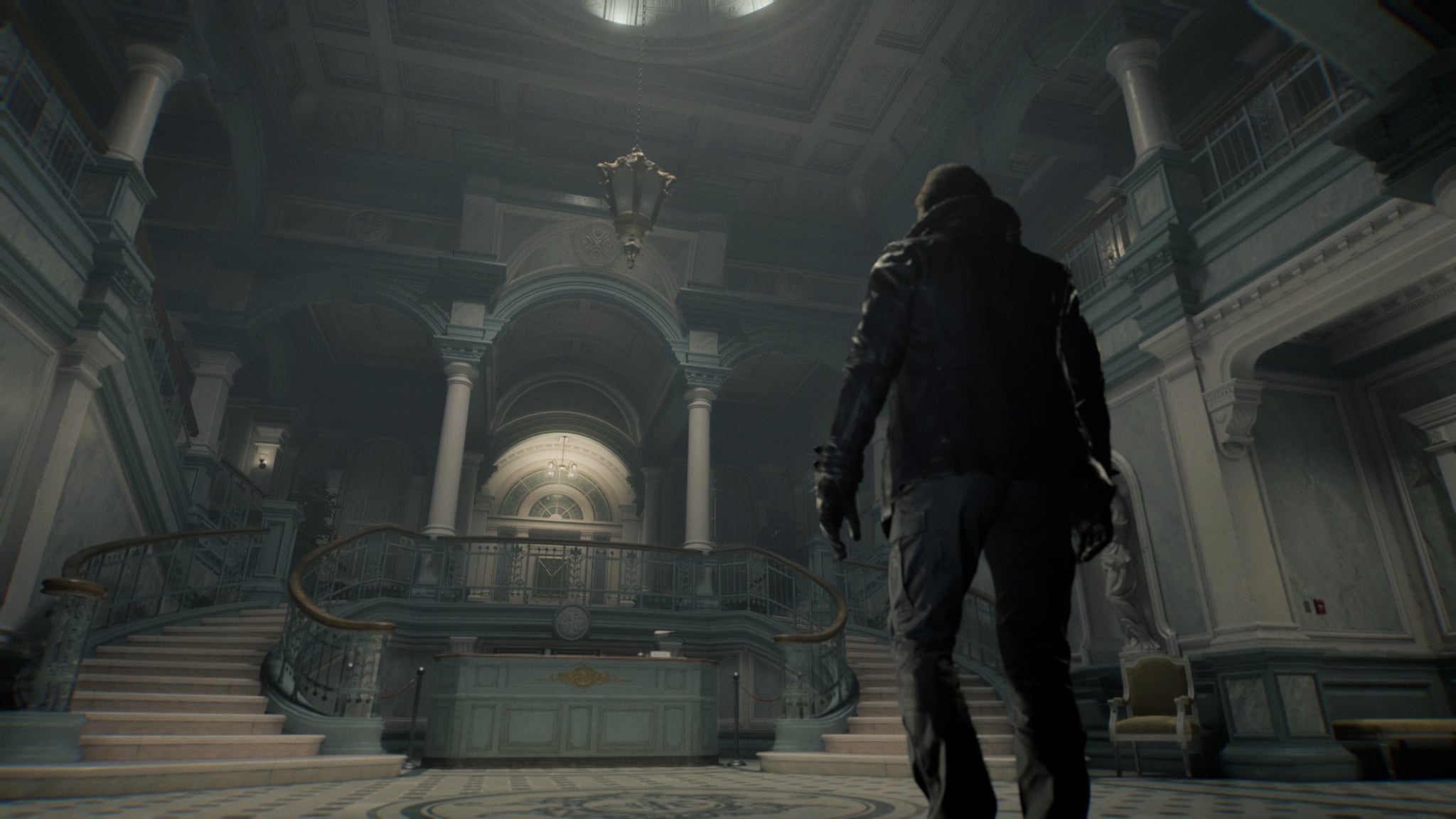
Regardless, for Nakanishi, horror is the well from which all else flows. “I think our starting point always has to be, as a team, defining the type of horror we’re seeking to achieve with a particular title,” he explains. “Because if we don’t have a clear vision for that in mind from the start of [development], then it’s very difficult to structure and design the rest of the game around it as a core.” And for Resident Evil Requiem specifically, that meant a renewed focus on an old foe. “We knew we wanted to deal with the legacy and history of the series,” says Kumzawa, “which meant that we were going to be returning to the Raccoon City storyline. So as the core element of the horror this time, zombies were what we decided was going to be the baseline of most of the game, unlike some of the more recent ones.”
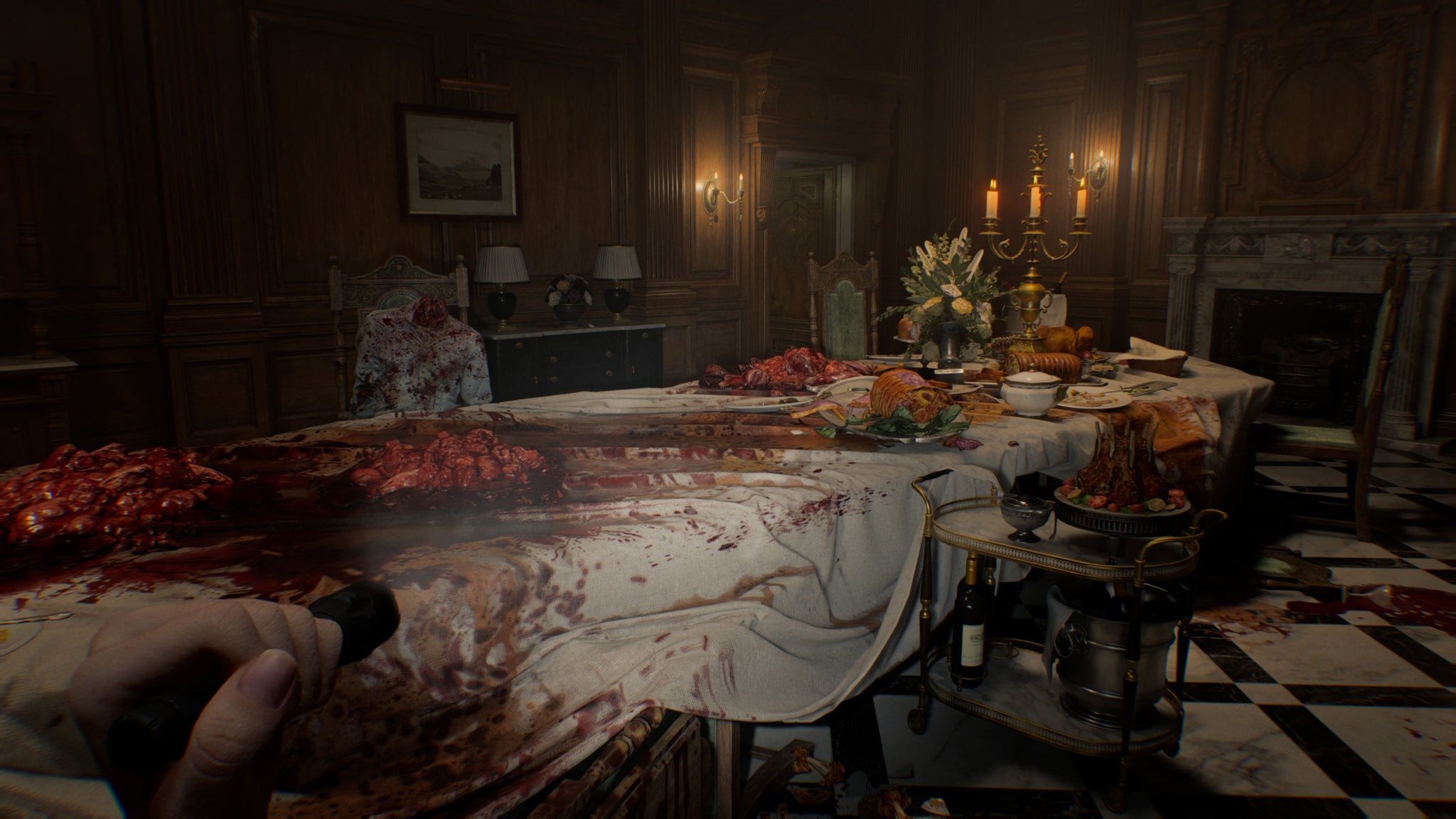
Requiem’s zombies are, of course, quite unlike anything the series has seen before. Many appear to have retained a strong sense of self even after their transformation into the undead: cleaners still furiously scrub blood-stained toilets; orderlies flick lights on and off; chefs still create grim culinary tableaux, and you’ll even encounter faded starlets prone to bursting into song. It’s a choice that manages to be comical, sad, and a little disturbing all in one. And that, notes Nakanishi, was very intentional.
Zombies work in horror, he explains, because of “this terrifying idea they were once human, but they’re not anymore. And seeing that reflected back on the person is what makes it scarier than just a monster that was never related to a human being. But we’ve seen so many zombies over the years that if we can’t make them do something a little out of the ordinary or unpredictable, then they start to become more difficult to make consistently scary.”
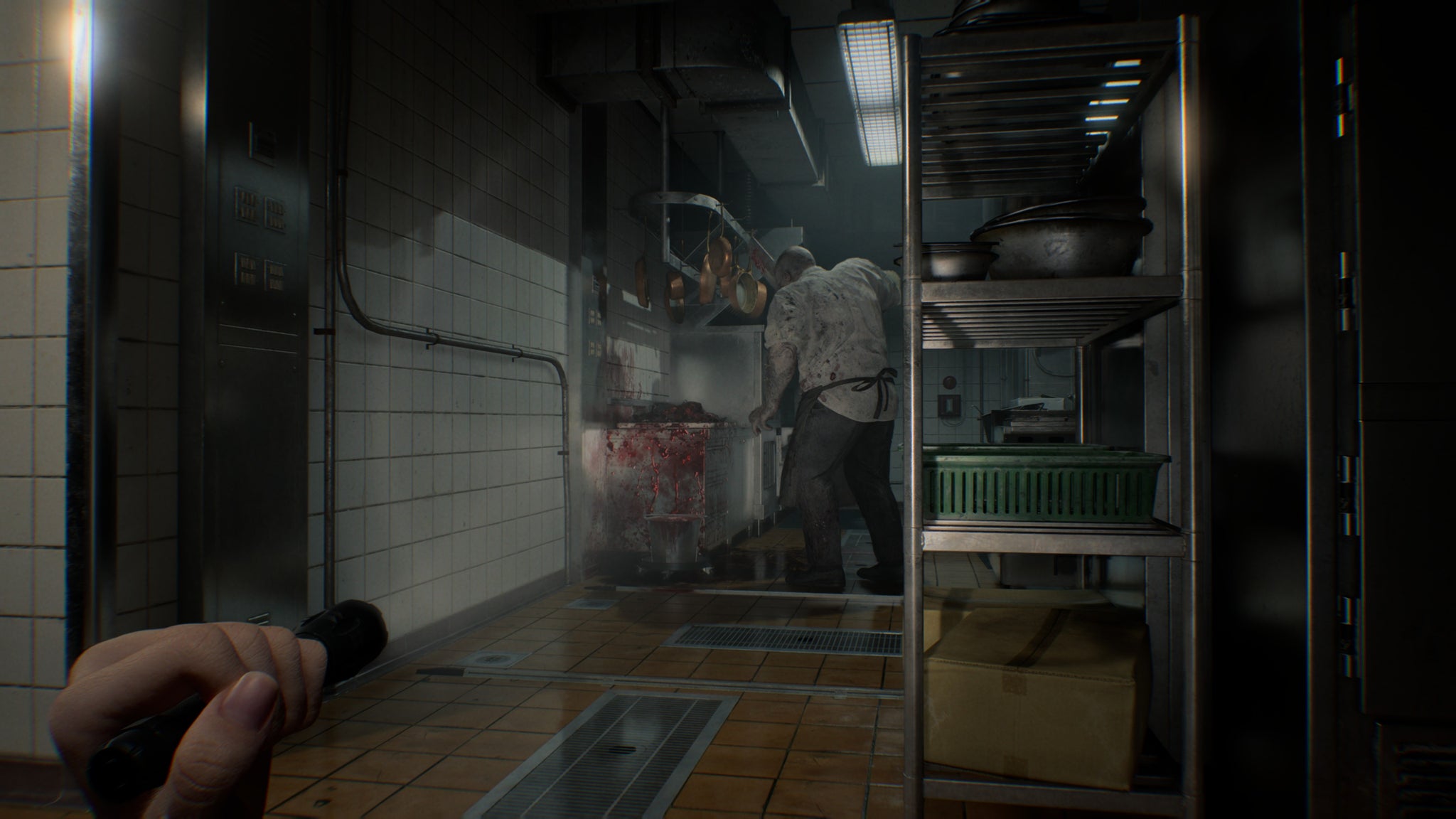
And so the Requiem team decided to lean heavily into that uncanniness this time around. “It’s creepier to see that they’re slightly more human in the sense that they’re repeating certain actions,” Nakanishi continues. “It almost looks like you could go up to them and talk to them and ask them what’s happening. But of course, they wouldn’t be able to reply. And that unsettlingness of them being almost human, but not quite, is something we wanted to use as the core of making them scary this time around.”
But as Kumzawa notes, zombies, no matter how uncanny, are only a small piece of the puzzle when it comes to orchestrating scares. “It can be scarier in scenes where there aren’t any zombies yet,” he explains. “Because the tension of not knowing where they’re going to come from, or if they’re going to appear at a particular moment, can be scarier than the specific moment you actually encounter a zombie. So that pacing of when to introduce a zombie into a scene or into a section of the game is really important; I think maintaining that tense fear throughout is what I’d say is scarier to me than just a jump scare or having constant threats.”
Of course, Resident Evil’s approach to scares has evolved significantly in the 30 years since its debut, and while Nakanishi acknowledges modern Resident Evil’s shift toward a purer form of horror is intentional – “We want to try and push things in terms of horror and fear”, he says – he also notes there’s such a thing as too far. “We don’t want it to be so scary and so unbearable that a large swathe of the fan base doesn’t want to play the game or can barely keep going,” he explains. “So there’s always a sweet spot to try and hit where it’s an addictive kind of fear, where you’re scared, but you want to keep going, to keep having that thrilling experience.”
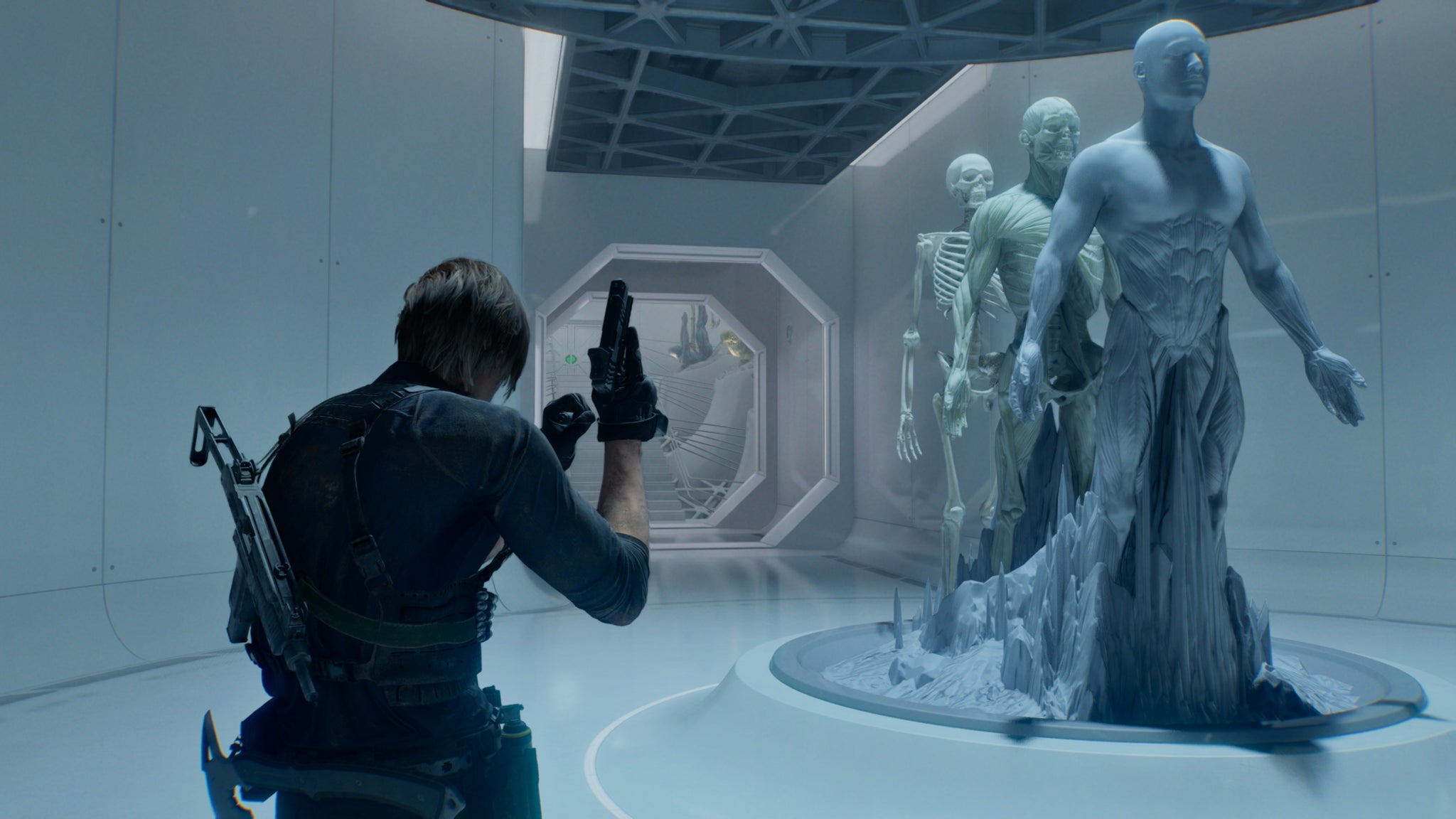
Obviously, Requiem’s regular shift between the intense horror experienced by series newcomer Grace Ashcroft and the more gungho action of Resident Evil stalwart Leon S. Kennedy is a big part of modulating that experience. “Leon’s sections were essentially a kind of a pressure valve release for some of the scariest sections in Grace’s,” continues Nakanishi. “If we hadn’t had Leon in the game, I think we would have had to rethink the structure and pacing of Grace’s sections to also give her those kinds of pressure release sections, where she’s able to blow off steam with a bit more action.”
One of Requiem’s most impressive feats, perhaps, is the way it successfully juggles tone, switching between horror and humour as it swings from Grace to Leon and back, one side never undermining the effectiveness of the other. “It’s both a balance and it’s also about the pace at which you introduce those elements so players can get accustomed to it and feel [one’s] not getting in the way,” Nakanishi explains of the challenges here. “We did want to gradually introduce [humour] so it isn’t like as soon as Leon appears, he’s just wisecracking constantly and slightly breaking the horror spell. So I think we kept his one-liners and whatnot to relatively few near the start. And as his scenes ramp up in intensity and he becomes more accustomed to the situation, we let him off the leash a bit more – and a bit more Leon-style craziness starts to happen, building up towards the end of the game.”
But in a game where that “craziness” includes motorcycling up the side of a skyscraper, is there such a thing as too far? To make it work, Nakanishi explains, “you want to decide which scene is going to be the maximum amount of peak Leon craziness, then keep it as the top level and not go any further – because you do need to balance it with other more serious scenes. So while Leon does motorbike up the side of a skyscraper and has a sort of crazy vehicle chase, he also then has more reflective scenes: where he arrives at the destroyed Raccoon City Police Department and is thinking back to his first day on the job; the scenes about his infection… We want to try and include the fun craziness, but also then have it conclude and give players a chance to get a bit more engaged in the serious storytelling aspect of the game.”
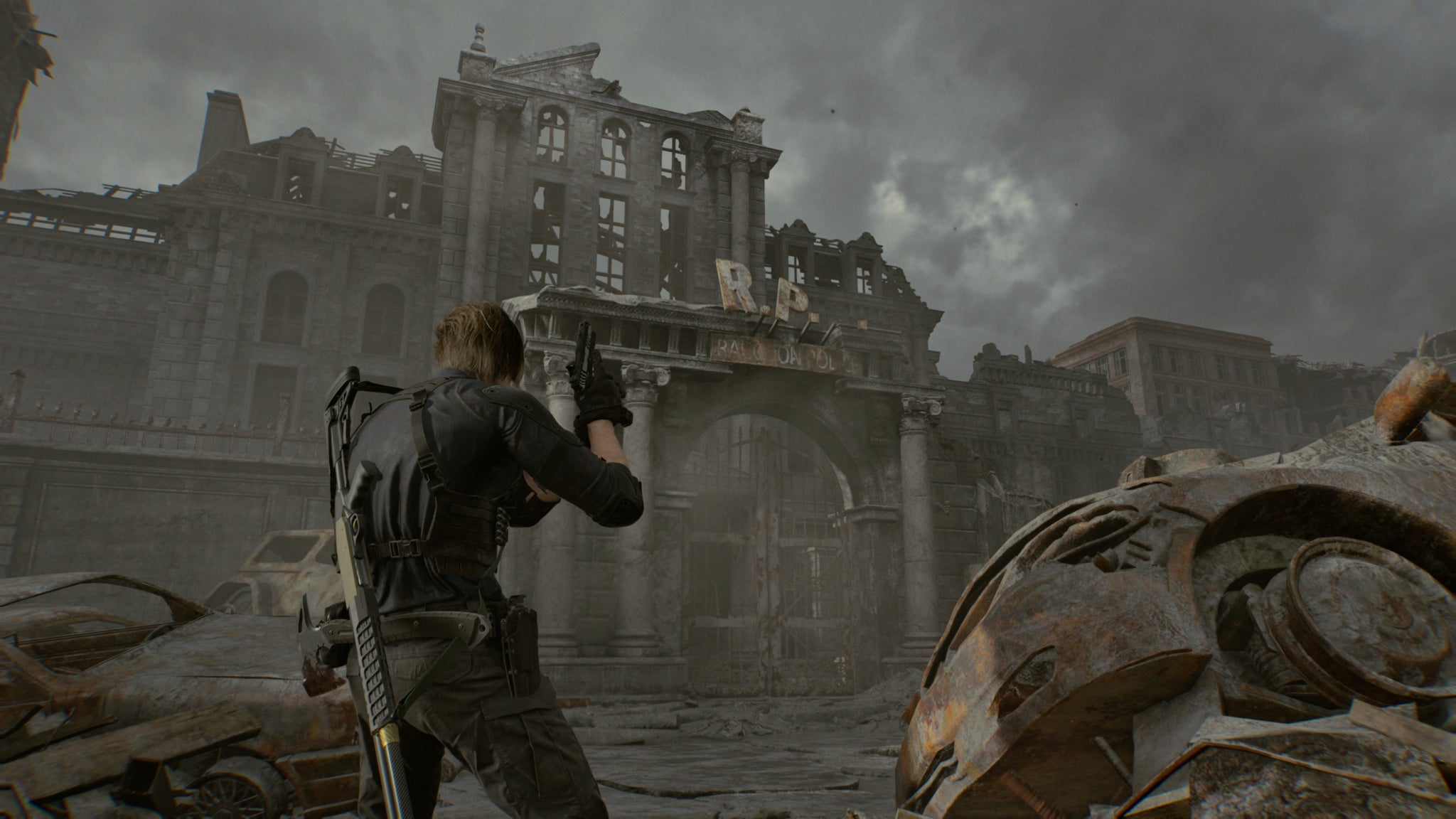
As for Leon’s return to one of Resident Evil’s most iconic locations, Nakanishi says it “seemed pretty obvious to us as soon as we decided early on in development that we’d be returning to present day Raccoon City for the first time in 30 years; that Leon would of course need to end up back at RPD.” Perhaps surprisingly, though, Requiem wasn’t originally planned as the 30th anniversary celebration it eventually became. “It actually just more or less worked out that way,” reveals Nakanishi. “But once we knew the game would ultimately end up releasing in the 30th anniversary year, it did motivate us to go further with including legacy references and making it a game that was befitting of the anniversary. But that wasn’t the plan going in necessarily.”
And when it came time to envisage what that celebration might look like, the team was keen to show some restraint. “We did want Easter eggs and references in there,” says Nakanishi, “but we kept it to the level where, you know, if you read the files, you’ll understand the references to past characters, or certain props and things that are in the different areas… But it was important for us not to, say, cram in a character that’s beloved by fans just so they can say, ‘Oh look, it’s such and such’… we didn’t have an intention to make it this sort of massive character reunion that wasn’t going to serve the storyline we wanted to tell.” As for personal favourite Easter eggs that made the cut, Nakanishi points to the Letters from 1998 included in Requiem’s Deluxe Edition detailing the Raccoon City incident; “I thought that was a really fun [one]”, he says. Kumzawa, meanwhile, makes a spoiler-free allusion to “something quite soft that appears in the Raccoon City Police Department that I really liked”. Presumably he’s referring to this tasty guy.
But while a nostalgic victory lap feels entirely earned as Resident Evil celebrates its 30th birthday, Nakanishi says the team remains acutely aware it still has to keep things fresh in order to ensure a new generation of players wants to engage with the series – perhaps even for the next 30 years. “That’s something that’s always in the back of our minds when we design these games,” he explains. “We always consider the content and design from the perspective of both the established fan base, who have been playing the games a long time and know them inside out, and new players… It’s something we do think about a lot, both with Requiem and with every Resident Evil title.”
“Fortunately,” continues Nakanishi, “that large and dedicated fan base is actually a great asset for Capcom because the word of mouth that Resident Evil fans share with other gamers who haven’t played yet, and the communication they do on our behalf to sort of get people up to speed on the series and help them feel confident they can play the latest game without any concerns, is something that we’re very grateful for. So with a legacy as long as this, I think that both audiences are something that you can cater for.”
And it’s clear the team’s strategy is working. While Final Fantasy boss Naoki “Yoshi-P” Yoshida recently admitted the long-running RPG series is struggling to attract new players, Resident Evil is more popular than ever. In just two months, Requiem has sold over 7m copies, making it the fastest-selling game in the series by far. And if that legion of players can agree on anything, it’s that Resident Evil newcomer Grace Ashcroft is a high point.
Nakanishi says the team has “been really glad to see” the reaction to Grace, attributing at least some of her immense popularity to that fact that “compared to some of our more stoic characters who’ve been through a lot in Resident Evil, this is her first time experiencing anything like this. She’s very emotionally expressive about the fear she goes through, being thrust into this intense experience. And it’s something I think players have just really responded to; because she’s so relatable, you root for her… you want her to get through this and be okay. I think that emotional relatability, in a horror game especially, is important.”
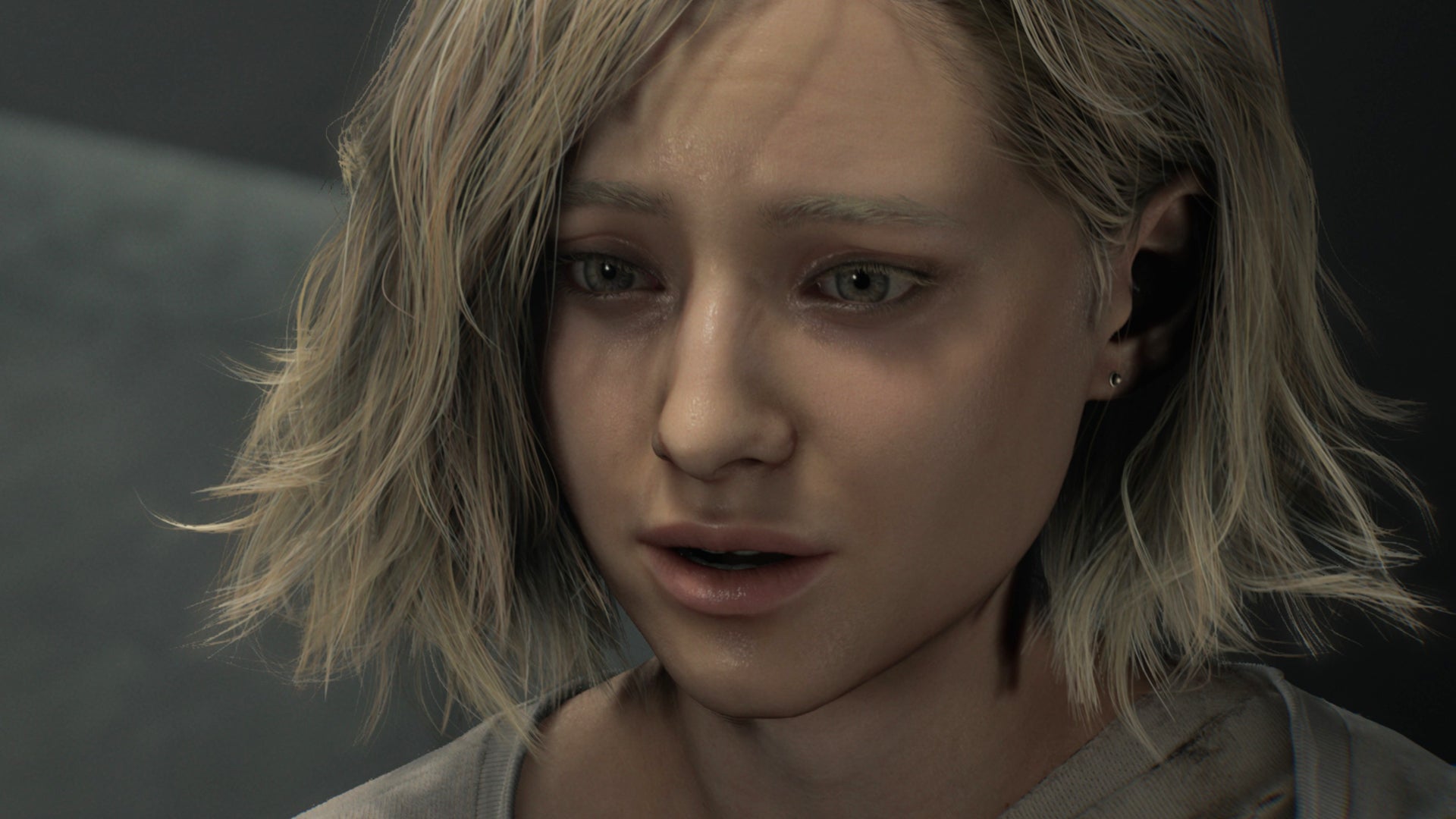
While we chat about Grace, I ask whether the team took anything away from the recent furore surrounding her DLSS 5 redesign revealed by Nvidia, which saw many fans rejecting her ‘glamourous’ AI-powered makeover. And while Kumzawa couldn’t comment on the team’s involvement specifically, he noted “the fact a lot of players commented they really liked the original design of Grace and didn’t want to see it changed was a positive… It meant we got the design right [and] points to the fact that Grace quickly established herself as a fan favourite, that people had such strong opinions on her design.”
But is there a pressure on the Resident Evil team to introduce a new generation of characters to the series? Not only to appeal to that all-important new generation of players, but to counter the fact the classic cast has an expiry date if they continue aging in real-time – Leon, for instance, is already pushing 50. “It’s not a cast iron rule that whenever we come up with a new game and we decide to release it here, that we have to exactly age everyone up to match it or anything like that,” notes Nakanishi, pointing to the Revelations side series as an exception. But more broadly, he says the team doesn’t “feel the need to replace [its most recognisable faces] with younger characters… we don’t really think of it in those terms.”
“I mean, I think Leon is really appealing in his current form,” Nakanishi adds. “And who knows, we could bring him back when he’s 70, and I’m sure he’ll still be a great character.”


